Design Key Points of Long-Stroke Heavy-Duty Truss Manipulator
Date:2026-08-06 Author:Truman Robotics Visit:162
The long-stroke heavy-duty truss manipulator is core automated handling equipment for large-span and heavy-load industrial scenarios, widely used in heavy machinery processing, new energy raw material handling, railway equipment manufacturing, warehouse palletizing and large workpiece logistics transportation. Different from ordinary light-duty truss equipment, the long-stroke truss manipulator features ultra-long spanning distance and super heavy load capacity, which puts forward higher requirements for structural rigidity, dynamic stability, driving matching and control accuracy. Mastering the design key points of long-stroke heavy-duty truss manipulator is the core premise to avoid vibration, deformation, positioning deviation and structural failure in long-distance operation.
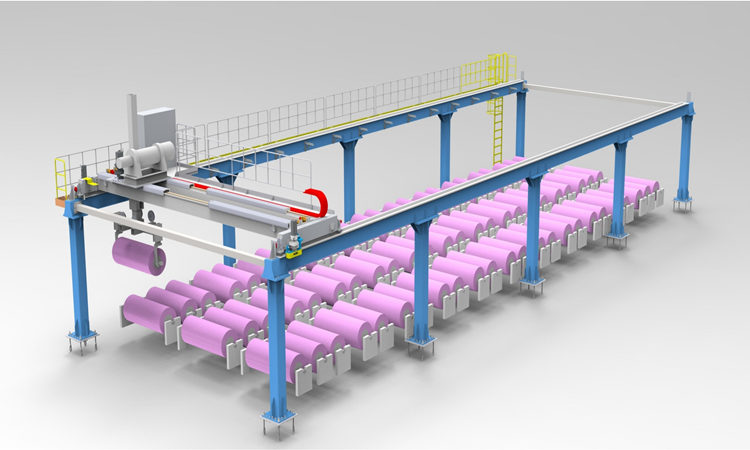
Structural rigidity optimization is the primary design key for long-stroke heavy-duty truss manipulators. Under long-span working conditions, ordinary single-beam structures are prone to bending deformation and high-frequency vibration under heavy load, which directly affects equipment stability. Professional design adopts high-strength box beam welded structure and integral gantry frame integration technology. The overall truss frame improves torsional resistance and load-bearing uniformity, effectively solving the sagging deformation problem of long-stroke cantilever operation. Reasonable reinforcement of supporting legs and cross bracing structures further enhances the overall rigidity, ensuring no obvious vibration during high-speed reciprocating movement of theheavy-duty truss manipulator.
Stroke grading and dynamic balance design determine the operational stability of long-span equipment. In the design process, the effective stroke must be scientifically graded according to the actual workshop layout and handling range, avoiding excessive idle stroke leading to reduced efficiency and unreasonable span causing structural load concentration. At the same time, the dynamic balance mechanism is reasonably configured to offset the inertial impact generated by long-distance rapid acceleration and deceleration. This design effectively suppresses end jitter, ensures smooth operation of the truss manipulator in the full stroke range, and maintains consistent repeated positioning accuracy.
Driving and transmission system matching is the key to realize heavy-load and long-stroke stable operation. Long-stroke heavy-duty working conditions require high torque and high response driving components. The design needs to select high-power servo motors and high-precision heavy-load ball screw or rack and pinion transmission pairs according to the maximum load and operating speed. The transmission clearance is strictly controlled, and the dual-drive synchronous technology is adopted for ultra-long span equipment to solve asynchronous deviation in long-distance transmission. Scientific driving matching reduces equipment operating resistance and wear, improving the continuous operation reliability of the long-stroke truss manipulator.
Precision control and anti-deviation system design guarantee long-term operational accuracy. Affected by gravity deformation and inertial vibration, long-stroke truss equipment is prone to cumulative positioning errors. The optimized design adopts closed-loop servo control system, real-time position feedback and automatic error compensation algorithm to correct tiny position deviations in real time. In addition, multi-point limit protection and anti-collision detection systems are configured to avoid structural impact and displacement deviation caused by over-travel, ensuring the long-term precision and safety of the heavy-duty truss manipulator.
Environmental adaptability and fatigue resistance design extend equipment service life. Long-stroke heavy-duty truss manipulators usually run at high frequency for a long time. The structural design needs to consider material fatigue resistance, surface anti-rust and anti-wear treatment, and guide rail dust-proof and protective optimization. Reasonable lubrication system layout reduces long-stroke transmission wear, and modular structural design facilitates later maintenance and component replacement, reducing long-term operating costs of industrial equipment.